
Miles Milbrath - "Do Beaver Dam Analogs Mimic Beaver Dams?: Effects on Food Webs, Structure, Function, and Water Quality in a Restored Stream"
"This funding from the Biodiversity Institute provides essential support for my graduate research by enabling comprehensive fieldwork and analysis of ecosystem responses to restoration. It will specifically support a field technician and the processing of isotope and trace element samples needed to evaluate how BDAs influence biodiversity, food webs, and water quality."
Miles Milbrath, Masters Student
2026 Recipient of the Biodiversity Institute Graduate Student Excellence Grant
Department of Zoology and Physiology
Graduate Advisor: Lusha Tronstad
Background
Beavers play a critical role in shaping stream ecosystems by building dams that slow water, increase habitat complexity, and support diverse aquatic communities. In many western landscapes, however, beaver populations have declined, contributing to simplified stream systems and reduced water retention. As a result, land managers have increasingly turned to beaver dam analogs (BDAs), human-built structures designed to mimic natural beaver dams, as a low-cost restoration strategy.
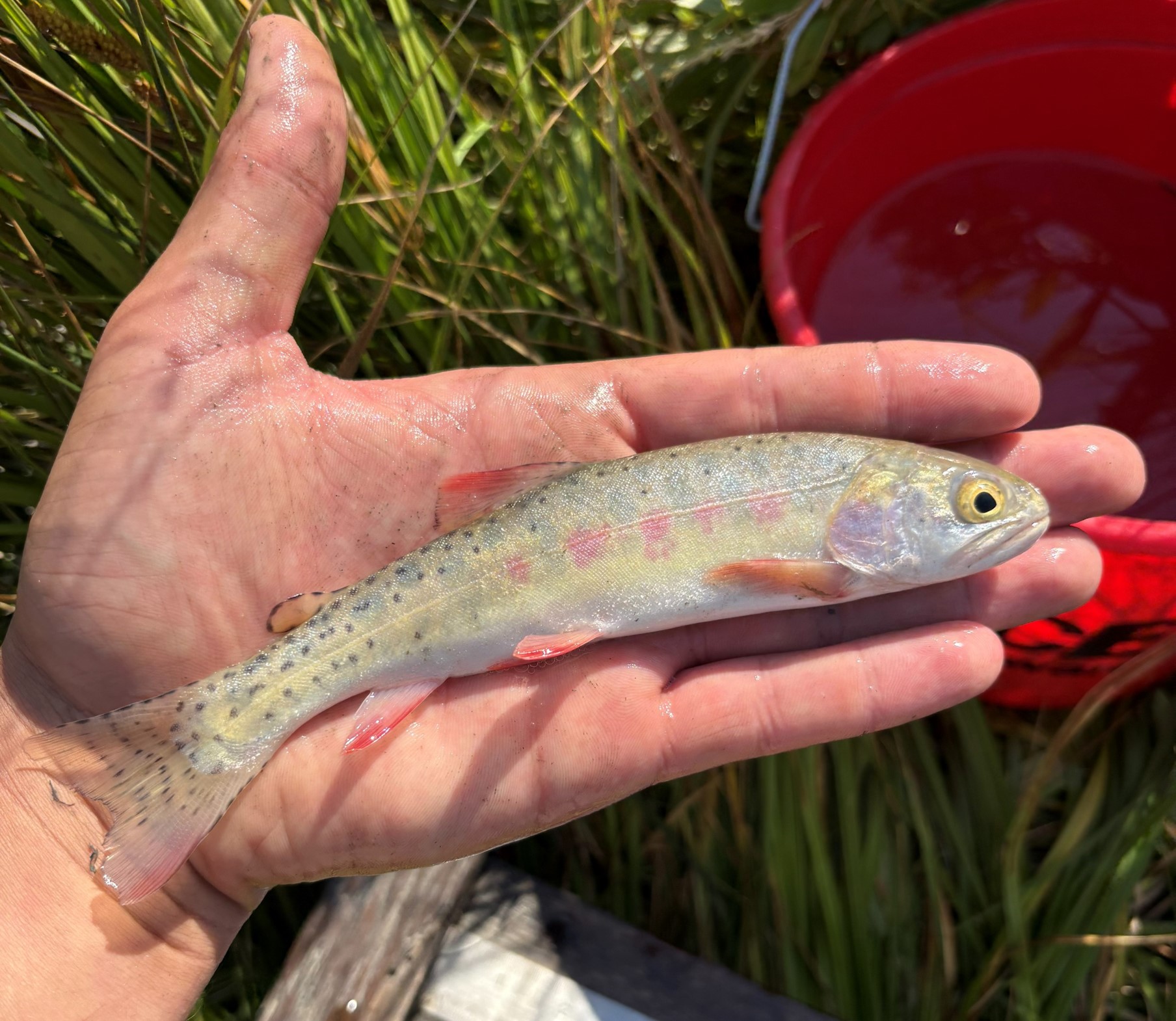
This project examines whether BDAs can effectively replicate the ecological benefits of natural beaver dams. Focusing on the Muddy Creek watershed in Wyoming, I am comparing reaches with natural beaver dams, BDAs, and BDAs with beaver activity to understand how these structures influence fish and macroinvertebrate communities, food webs, water quality, and ecosystem processes. By linking biological responses with changes in nutrient cycling, water retention, and trace element dynamics, this research will evaluate the potential of BDAs as a practical and scalable restoration tool in semi-arid systems.
Project Goals
This project aims to quantify how different dam types influence stream ecosystems across multiple levels. Specifically, I will measure variation in fish and macroinvertebrate communities, characterize food web structure using stable isotopes, and quantify ecosystem processes such as nutrient uptake and primary production. I will also assess how these structures affect water quality, including salinity and trace element dynamics. Together, these objectives will provide clear insight into how restoration structures shape ecosystem function and resilience.
Share This Page
Research Highlights